
Strengthen your sales pitch and improve closing rates by learning how to lead with the benefits.
Ever feel like you’ve hit a dead end in a sales pitch?
You’ve explained the best features of your product and still hear nothing but crickets on the other end. What went wrong?
Well, it’s probably that the customer just doesn’t care. They’re just not interested in your building. What they really want to know is what your building does for them. Underline that twice.
Usually, just talking about your product won’t convince a prospective customer to purchase. However, when you learn to lead with benefits instead of features, you’re well on your way to making the sale. Here’s three steps to having conversations that count – conversations that will leave your customers demanding your product.
#1 – Listen and Identify the Need
You probably start every sales conversation this way. The customer walks in. You offer them a cup of coffee and ask, “What can I do for you today?”
That’s perfect. When you can identify the need, it’s easier to focus on the customer rather than your own favourite features.
Generally speaking, we tend to want to focus on the features that make us stand out from our competitors. We are excited about them – and our customers should be excited too. Right?
Not really. If they don’t get why the feature matters, they won’t care about it. Your brand new insulation panels won’t be a selling point if the customer doesn’t understand that they can save 33% on their monthly energy bills with the new style.
When you can identify the customer’s need and understand their end goal, you can lead with the benefits that your customer should hear about.
What does that look like? Simply put, it means that you focus on how your product fills the customer’s need throughout the conversation.
However, you shouldn’t lead with just any benefits. First, you’ll need to understand the angle – which benefits matter most to the customer.
#2 – Discover the Angle
Every good story, news article, and sales pitch has a strong angle. It’s the perspective or focus of the conversation, from start to finish. When you have a solid understanding of what your angle should be, you will be equipped to lead with the benefits and your sales pitch will be more engaging and more persuasive.
If your customer is shopping around and getting prices from other building suppliers, it becomes even more important to discover the angle. You’re no longer trying to convince them to buy a building – you’re convincing the customer to buy your building.
Think of it as shopping for a new dress shirt. The dress code? Shades of blue.
The sales guy grabs a bright red shirt and starts telling you about the quality. The comfort. The innovative design of the buttonholes. It’s a great shirt, but it’s not blue and it’s not what you need. He understood your need for a shirt, but he failed to discover the angle.
That’s where asking the right questions is important. Thinking of your own customers, you want to know more than just their building dimensions – you want to know what they’re using the building for. You want to know often they’re in the building and what they value most – security, convenience, or workspace.
Discovering the angle means that you can lead with the benefits that matter most to your customer and
make your sales pitch the most convincing sales pitch they’ve ever heard.
#3 – Lead with the Benefits
Now that you know what your customer needs and you’ve discovered the angle, you are ready to lead with the benefits. Remember, you’re not just telling the customer what the product does. You are telling
the customer what it does for them and how it meets their needs.
Leading with the benefits means that you need to tailor your sales pitch to the customer – it’s no longer
one size fits all.
Like that dress shirt. This time, the sales guy asks you about the event – location, date, and dress code. Then, he pulls out a blue shirt and tells you about the breathability, how you can toss it in the washing
machine without worrying about damage, how the colour goes perfectly with that pair of pants that’s
currently on sale. He took each feature of the shirt and turned it into a benefit to you.
Leading with benefits means taking the physical features of a product (or service) and turning it into an advantage to the customer.
Let’s do the same thing with a building.
Your customer needs a new machine shed for maintenance and equipment storage.
You ask a few questions and discover that they want to use the building before winter and that they are hoping to upgrade their combine sometime in the next year or two. Where do you start?
Look at your building features and turn them into benefits.
Insulation? It makes winter maintenance more comfortable and your new insulation panels lower energy costs by up to 33%.
Walls and framing? They offer a larger clear span so there is more room to maneuver and store large equipment (including that new combine).
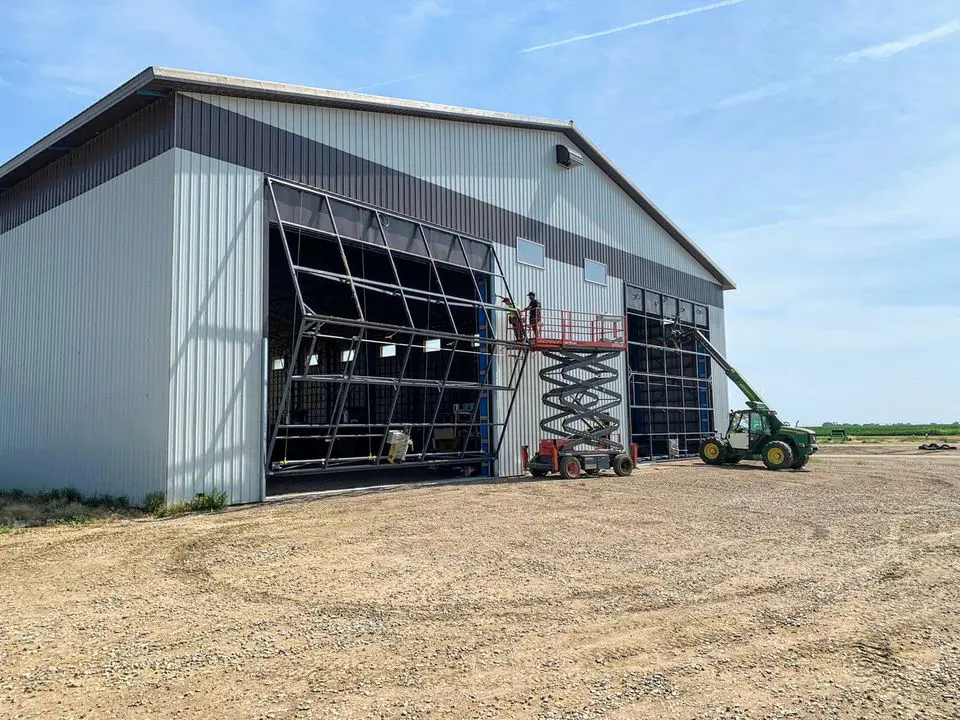
Bifold door? Again, a larger clear opening and more room to move that large equipment.
Your experienced construction crew? That building is up and operational before the snow flies. Plus, your
customer can rest assured knowing that their building will last for many, many years.
Putting it All Together
This kind of intentionality in a conversation takes practice and a strong understanding of what you can offer to your customers. Take time regularly to review the features of your buildings and turn them into advantages for your customers.
Here’s a quick checklist before your start your next sales conversation.
- Do I understand my customer’s end goal?
- Do I know what my customer needs?
- Do I know how my product fills those needs?
- Can I clearly explain the advantage to my customer?
