
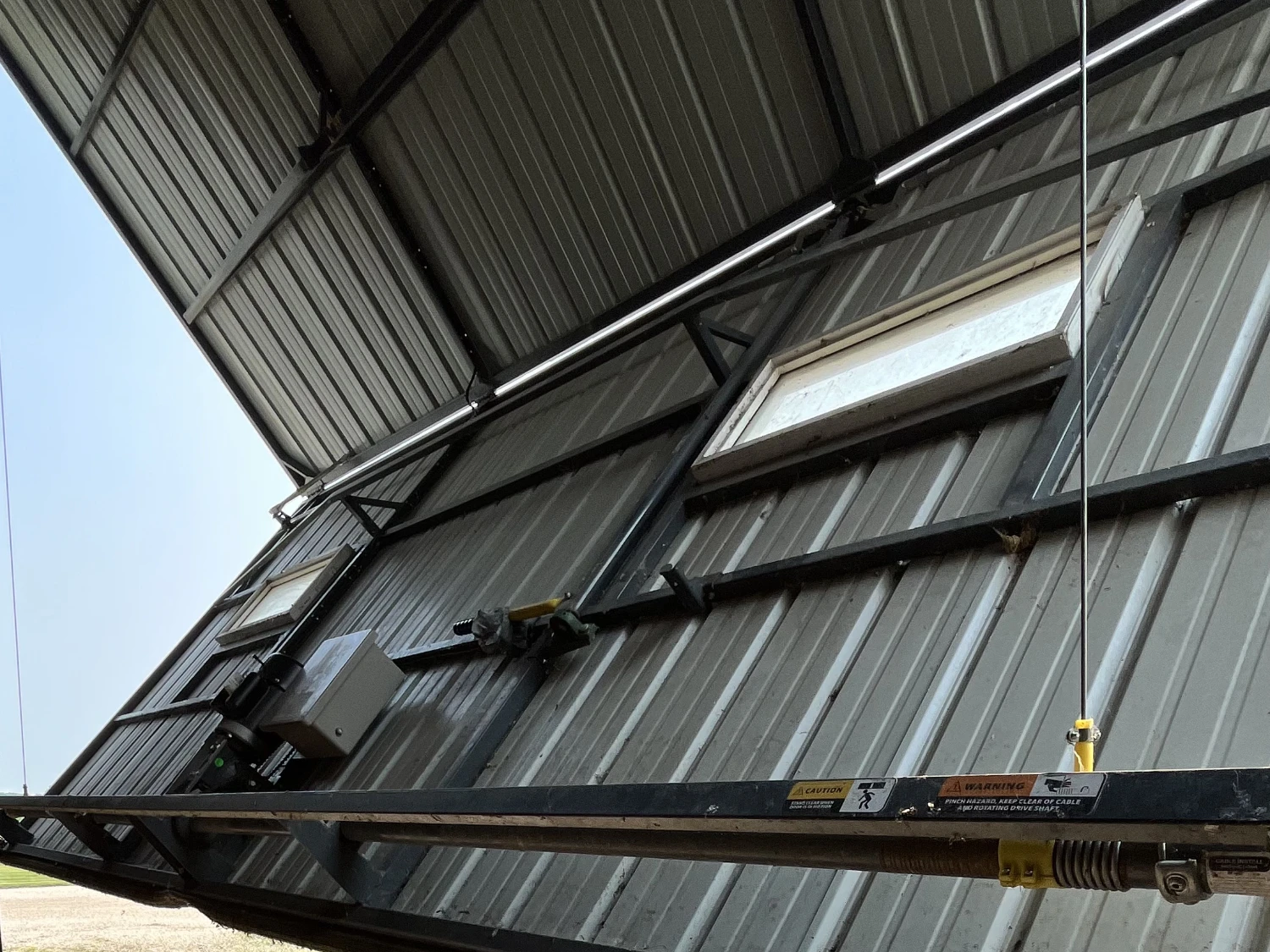
Wiring your building for your new bifold door is the first step toward a successful bifold door installation. It’s relatively simple and straightforward, but also a crucial part of ensuring that your door works well for many years to come.
We’ve put together a comprehensive guide on wiring your building for your bifold door. If you have any questions that are not answered here, our service team is available to help. Contact them on our parts and service page, toll-free by phone at 866-325-7600, or by email at service@diamonddoors.com.
Why is it important to correctly wire your building?
Diamond Doors uses an electric brake motor to operate our bifold doors. The integrated brake on the lift motor is an essential safety feature, securely holding the door in place when power is cut to the door – even while the door is open. It’s a standard feature on all of our doors, locking the door in place during a power failure and preventing it from creeping downward. (Our doors are also equipped with a brake release for manual operation.)
However, the design of the brake motor does mean that it comes with unique wiring requirements, including a wire gauge that is larger than most building owners and electricians expect. Of course, there’s a good reason for that.
Why a larger wire gauge?
When a brake motor operates, it initially draws a huge inrush of current, which can be up to ten times the rated amperage of the motor. Part of this inrush of current is used to release the brake. However, a wire size that is too small will cause a voltage drop that prevents the brake from releasing. This causes an overload in the motor as it strains against the unreleased brake. Over time, this will damage the motor or even cause it to fail entirely.
How does wire gauge and length affect voltage?
If you look at our wire gauge charts, you’ll notice that we require a larger wire gauge for longer electrical runs.
Wire gauge, or size, affects voltage because of the resistance caused by the wire. A narrower wire creates more resistance by forcing the electrons through a smaller area. Similarly, a longer wire causes more resistance since the electrons have further to travel. And of course, more resistance causes a larger voltage drop.
However, a large enough wire, even over a significant distance, will ensure that the voltage doesn’t change enough to affect your equipment – in this case, your bifold door lift motor.
Which wire size is right for your door?
Our electrical manual includes a useful wire gauge chart (you can also find it here) to help you choose the right wire size for your building and bifold door. The chart shows the required minimum wire gauge for your bifold door installation, measuring the distance from the building’s electrical panel to the door’s lift motor.
You will also need to know the type of power supply to your building (phase and voltage – you can generally get that information by checking your building’s electrical panel) as well as the horsepower rating of your bifold door. You can find this rating on the second page of your quote, or if you’ve already received your door, on the cover of your door’s electrical box.
A general rule of thumb is that a larger horsepower motor (usually for a larger, heavier door) will require a large sized wire. The further your lift motor is from your building’s electrical panel, the larger the size of the wire as well. However, you will also have to consider your power supply – whether it is single phase or three phase power.
What is the difference between single phase and three phase power?
Single phase power is what most of us think of when discussing building wiring. It’s an alternating current with a single “wave” of electricity, commonly used for residential applications due to its simplicity and lower cost of installation. It’s perfectly suited to the low demand needs of the average home.
Three phase power uses a three wire, or sometimes four wire, system that provide electricity in consecutive and overlapping “waves”. This reduces the change in voltage, providing a steadier electrical supply that is ideal for high demand applications and heavy loads. This is why three phase power is the more popular choice for industrial shops and commercial buildings.
Is single phase or three phase power better for a bifold door?
While most of our bifold doors will work well with single phase power (the exception being for very large and heavy doors), three phase power is always our preferred power supply.
That’s because our doors are basically the equivalent of a crane hoist lifting a full load. Like any other piece of large equipment, such as a mill or a welder, you want to ensure that your power supply is as steady, efficient, and reliable as possible. Three phase power is the easy choice if it is available.
Note: Ordering your bifold door? Be sure to specify to our sales team the power supply that is available in your building.
Other things to consider when wiring your building for a new bifold door
We’ve had many customers ask about using a generator to power their bifold door, either permanently or during a power failure. At Diamond Doors, we don’t recommend using a generator. This is because many generators, especially the kind that are most common to see around the hangar or shop, don’t have the capacity to provide a sufficient power supply to your bifold door.
Like choosing a wire size that is too small, this can easily cause damage to your bifold door. Most generators also don’t provide a consistent enough voltage to run the door’s lift motor without damage.
What do you do when the power goes out?
Our lift motors are equipped with an emergency manual opener. When the power goes out, this option allows your to safely operate your bifold door. (Some large doors, especially those with motors rated at five horsepower or more, do not have a manual operation option due to their size and weight.)
Complete instructions on manually operating your bifold door can be found in the owner’s manual provided with your door. For further assistance, contact our service department and they would be happy to help.
New building – where should I put my electrical panel?
Whenever you can, we recommend putting the main electrical panel for your building as close to your bifold door as possible. The primary advantage to this is that it reduces the cost of wiring your bifold door. Of course, you should also consider any other large equipment in your building that may have specific wiring needs.
Can I complete the wiring myself?
All wiring and electrical connections should be completed by a registered or licensed electrician according to your regional building codes.
Correctly wiring your building for our bifold door is important to ensure that your door works well for many years. If you have questions or concerns about your bifold door, contact our service department. Call our office at 866-325-7600 or email service@diamonddoors.com. We look forward to helping.
