
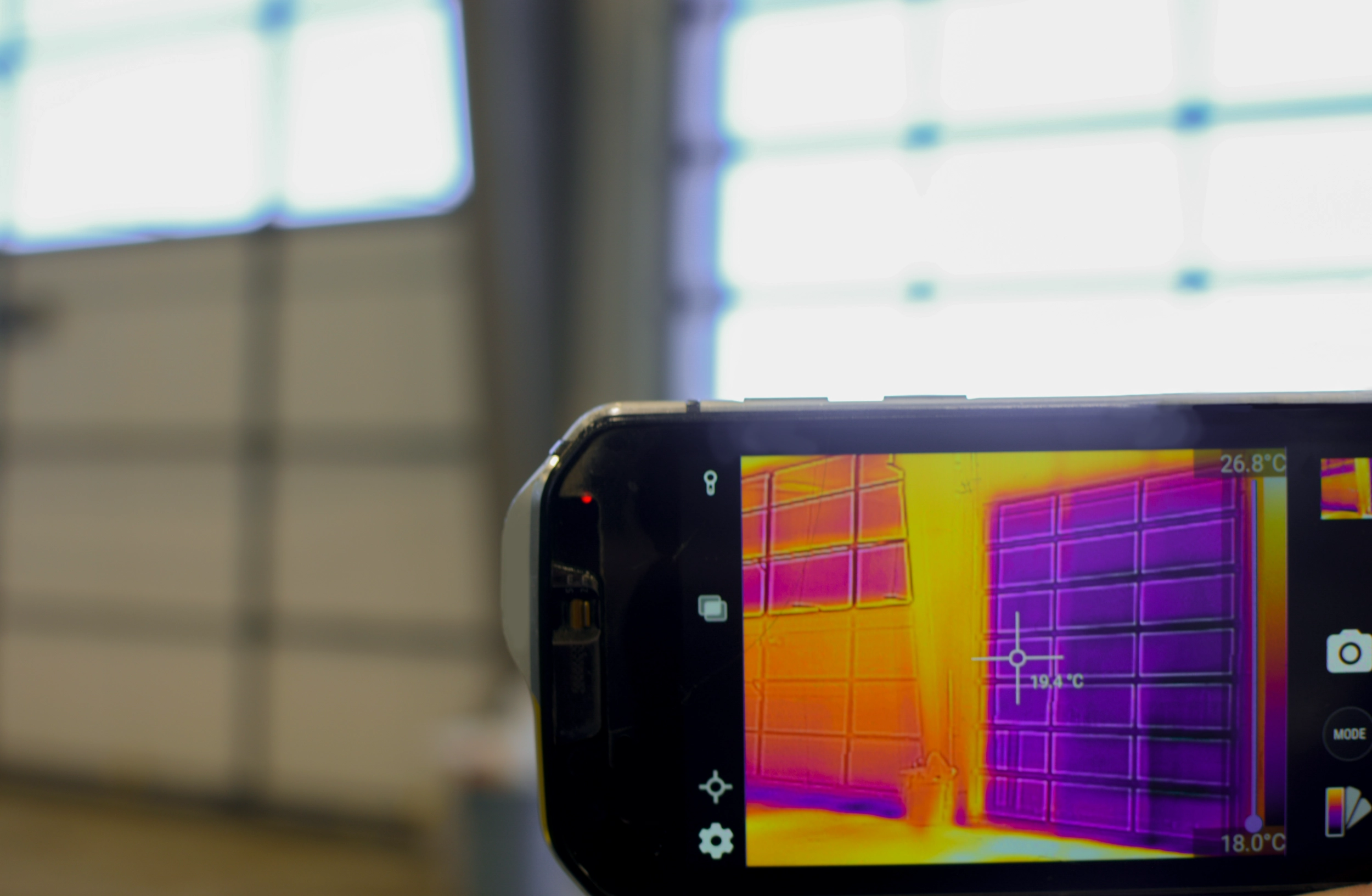
Whether new or old, the energy efficiency of your building has a drastic impact on your energy bills and overall comfort.
Like most of us, you’ve probably noticed a sharp increase in the cost of heating or cooling your farm building, workshop, or hangar. These high bills can hurt, but the good news is that there is something you can do to bring those costs down.
Or perhaps you have an existing building that you want to upgrade, such as a cold storage building for your farm equipment that you’d like convert into a winter workspace. Let’s take a look at what causes energy loss so you are equipped to get started on upgrading your building, and how a bifold door can improve your energy efficiency.
What causes energy loss?
There are several areas on any building that are especially prone to energy loss. This includes any open holes in the building frame, poorly insulated walls, and crack or gaps around windows and doors. In fact, poorly insulated windows, skylights, and doors are estimated to cause up to 35% of energy loss in a building.
Energy – in this case, heat – is lost in three different ways when considering a building.
Conduction transfers heat through solid materials. The material acts as a bridge, moving the heat from one side to the other. As an example, this is what happens when heat is lost through walls.
Convection transfers heat through fluids or gases (like water or air). Since warm air and water are lighter than their cooler counterparts, convection causes hot air (or warm water) to rise. Air infiltration is a type of convection and is what causes energy loss through gaps around doors and window frames.
Radiation is the final type of heat transfer. It is the transfer of heat through electromagnetic waves, just like the sun transferring heat through outer space. All objects lose heat through thermal radiation, though the amount of heat loss is dependent on the overall difference in temperature between the object and its surroundings.
Upgrades to Improve Energy Efficiency
If you are looking to reduce your heating/cooling bills, here are a few ideas to help you get started.
Upgrades and maintenance on windows
Some energy loss from windows and doors can’t be avoided. It happens simply because they are windows and doors. However, recent changes to the design and manufacturing of doors and windows mean that an upgrade can result in significant energy savings.
Consider replacing any broken or single pane windows with new windows. A properly installed double pane window has an R-value between R3 and R3.8. (In comparison, single pane windows have a lower R-value of R1-R2, and broken windows are even lower.) This higher R-value means that less heat or energy is lot through the window.
Insulate gaps and cracks
You might also want to consider filling any cracks and gaps around your windows and doors with spray foam insulation. This will help prevent energy loss by eliminating air infiltration. For small projects, you can easily purchase a can of spray foam at your local hardware store.
Reinsulate poorly insulated walls and corners
While this is a significantly more involved project, you may want to look into reinsulating areas of your building that are losing large amounts of energy.
First, connect with a local energy auditor or building inspector and have them assess your building for energy loss. Typically, you will see the greatest losses through windows and doors, and the roof. However, we’re also looking for walls and corners that might have unusually high energy loss.
After you’ve found your problem areas, you’ll want to decide how you plan to insulate (or reinsulate) those areas.
Spray foam is a common choice for unfinished buildings, offering R-values of R3.5 (open cell spray foam) and R6 (closed cell spray foam) per inch of thickness.
For buildings with a finished interior, blanket insulation is a common choice. It is cheaper and easier to install than spray foam. However, going this route will mean that you need to remove the existing finished wall.
Upgrade your large shop or hangar door
It’s not just your windows and pedestrian doors that can cause energy loss. Your large door may be the number one cause of energy loss in your shop or hangar.
Sliding doors, of course, are nearly impossible to seal and easily allow cold air, rain, and snow into your building. Overhead doors, while a better choice than sliding doors, are still prone to air and weather infiltration through the many seams between panels and at the sides. Plus, they often limit the size of your clear opening and access to your building.
However, a bifold door offers better temperature control, a large clear opening, and convenient door operation. Here’s how it works.
Insulation and energy efficiency
At Diamond Doors, our bifold door insulation package is available in R12 (two inch thickness) and R16 (three inch thickness). These rigid board insulation panels are installed on the outside of the bifold door frame, providing insulation coverage across the entire face of the door. It’s easy to install on your bifold door, easy to maintain, and provides unmatched energy efficiency.
In addition, bifold doors are installed to the exterior of the building, with a secure locking system that creates a weather tight seal by pulling the door snugly against the door frame. A top canvas seal prevents rain and snow from entering the building at the top of the door, and a bottom rubber seal provides a barrier between the bottom of the door and the finished floor.
Other advantages to a bifold shop or hangar door
Bifold doors offer a larger clear opening than door styles like overhead doors. Unlike overhead doors, they are installed on the exterior of the building, meaning that they won’t take up interior headroom. This also means that bifold doors can be installed above the roofline of some buildings, with a clear opening that maximizes the useable space of the building.
While sliding doors can offer the same clear opening sizes as a bifold, they can’t compete in terms of convenient operation.
Diamond bifold doors are equipped with a reliable electric lift motor that operates with the push of a button. Instead of struggling with your jammed sliding doors, you can watch while your door reliably opens day after day.
Ready to upgrade your building?
Whether it’s to stay comfortable, or to lower your energy bills, improving the energy efficiency of your building is a smart move. If you have more questions about how a bifold door can help, chat with our sales team. We’re always happy to hear from you.
